Research Interests
I am a writer and producer with a passion for art, cultural heritage, and sustainability.
Research interests
I hold a BA in History and French from Oxford University, a master’s in Creative Writing from Royal Holloway (University of London), and most recently, a master’s in Urban History and Culture from the University of London Institute in Paris.
My research focuses on the history of knowledge production. More specifically, I am curious about how our definitions of knowledge are culturally defined, and how certain forms of knowledge are privileged over others at different times and in different places.
I have always been interested in the intersection between art, culture and science, and my work seeks to question the boundaries between these categories. I’ve been lucky to be able to explore this interest in both my professional and academic life. While working as a copywriter for the Royal Botanic Gardens, Kew, I became fascinated with the history of botanical science and how a society’s relationship with plants offers a window onto its cultural practices and priorities.
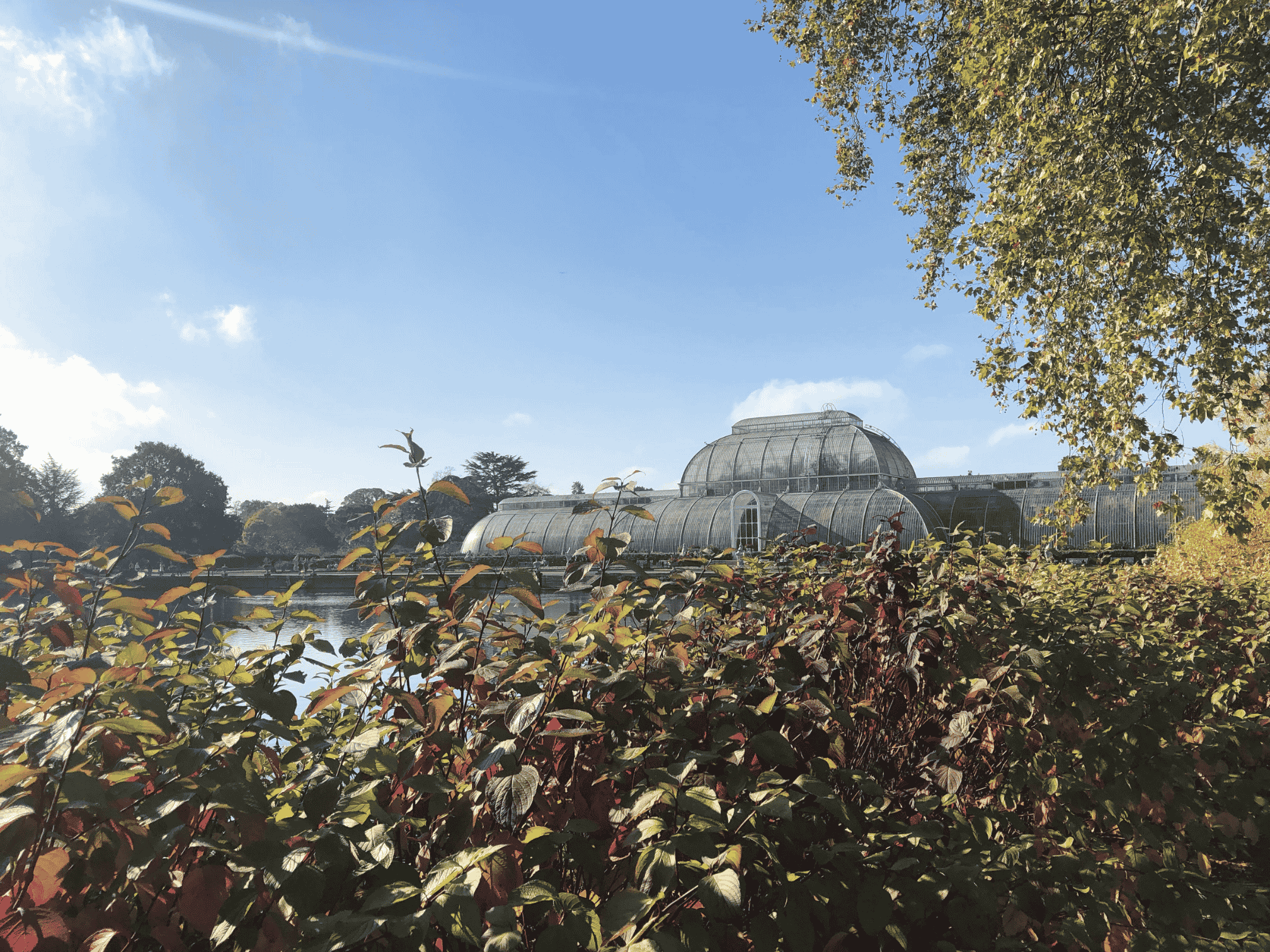
The Palm House at Kew Gardens, London (photo mine)
Across the world, plants are valued for food, shelter, medicine, trade, ancestral knowledge, fragrance, decoration, and more, but the relative value placed on each of these varies depending on where you are. In European botanical gardens like Kew Gardens in London or Paris’s Jardin des Plantes—which operate as both heritage sites and modern scientific institutions—the cultural value placed on plants points backwards and forwards. Looking backwards, their vast plant collections and glasshouses are living archives that bear witness to voyages of colonial exploration and expansion, monuments to the relationship between science, violence and power. Looking forwards, they are laboratories dedicated to environmental conservation, innovative plant medicine and the preservation of life on our planet.
In other words, beneath the aesthetic of manicured gardens and glimmering glasshouses lies a complex web of dynamics that embody the roots of contemporary ecological concerns as well as possible routes to renewal and repair.
In the spirit of the quotation from Zora Neale Hurston above, I chose to follow my curiosity and pursue more formal research into these dynamics by taking a career break to complete an interdisciplinary master’s in history and cultural studies. I received a high distinction for my dissertation, ‘Entangled Enlightenment: The creolised science of French travelling philosophes in the eighteenth century’, which explored the travel accounts of Enlightenment-era scientists in South America and West Africa.
My research aimed to explore how colonial contact between African, Indigenous and European experts shaped the emergence of botany as a science. In doing so, I had to reckon with the reality that many of these African and Indigenous experts remain anonymous in the accounts of European travellers, who simultaneously depended on the knowledge of local informants while questioning or overlooking the value of this knowledge. I argued that this resulted in a form of ‘creolised’ science, a knowledge system shaped by cross-cultural mixing that emerged from asymmetrical colonial encounters.
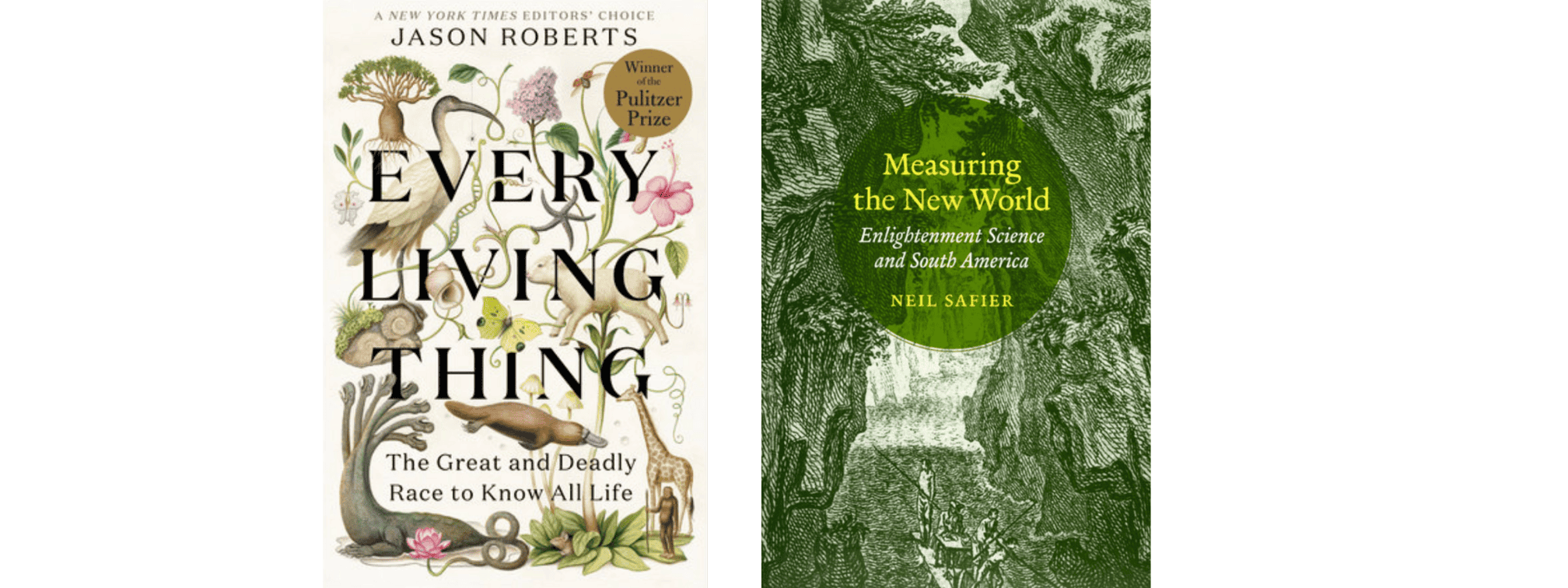
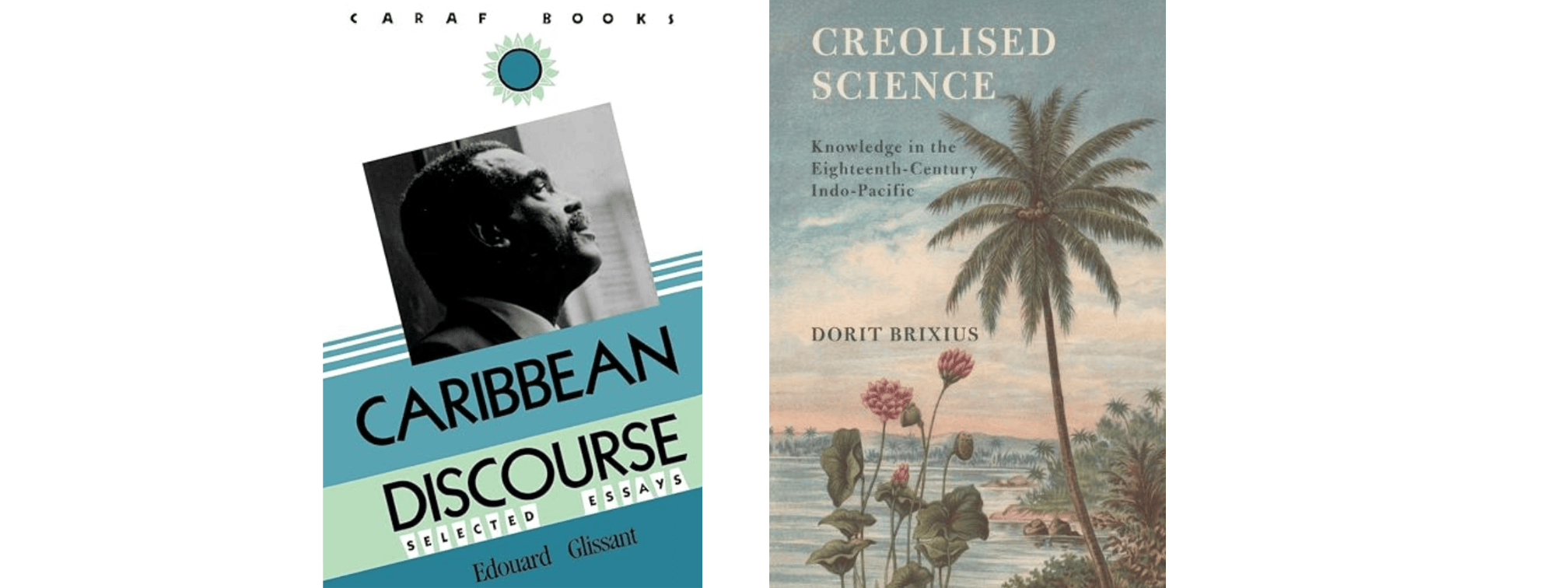
Informed by the innovative approaches of historians such as Saidiya Hartman, Londa Schiebinger, Jason Roberts, Samir Boumediene, Dorit Brixius and Neil Safier, my historical research seeks to excavate the presence and influence of non-European actors who have typically been eclipsed in traditional narratives on the history of science. At the same time, my thinking on créolisation/ creolization is inspired by the writings of Édouard Glissant and Stuart Hall and their reflections on the forceful cultural entanglement set in motion by the Columbian landing.
Although my research is rooted in these historical questions, it is also firmly anchored in the present-day reality of living in a globalised and urbanised world where our connection with ‘nature’ is increasingly disrupted. My interest in the history of botany as a window onto cross-cultural knowledge systems is largely driven by a desire to re-enchant myself with the natural world. By highlighting that there are many ways to understand life on this planet, I hope to point to alternative possibilities for inhabiting our environment beyond the model that dominates today.